Measuring More Than Income: Dr. Mitra Nasseh Presents RMEI Tool in International Public Lecture on Refugee Economic Integration
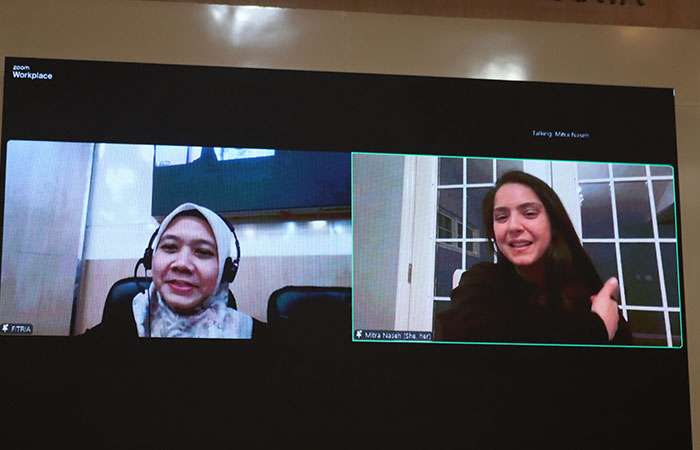
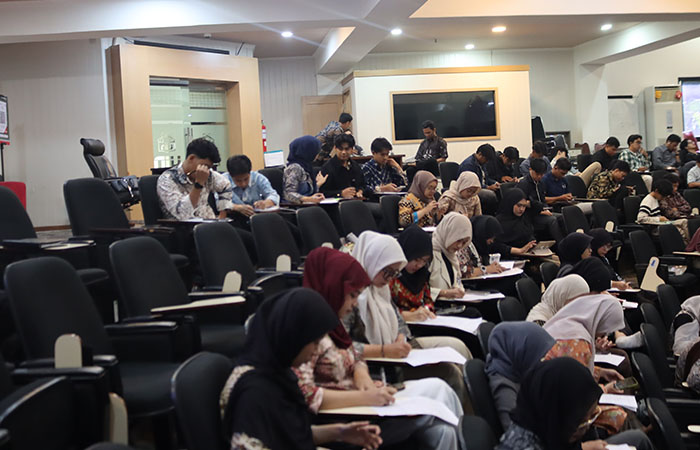
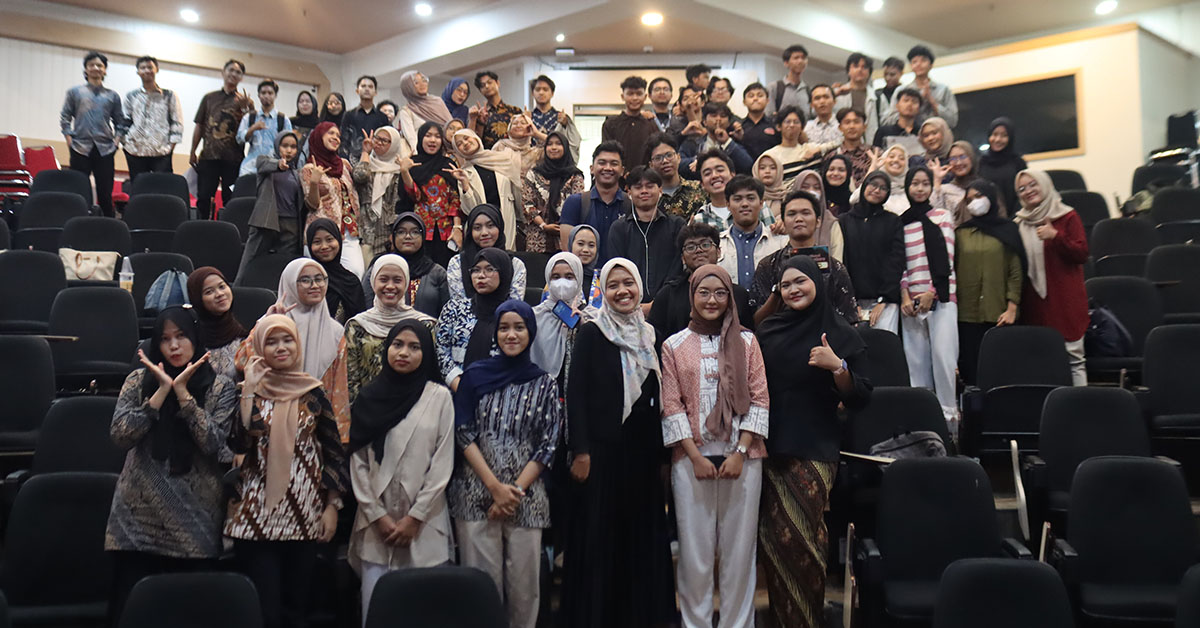
FSH News, 2nd Floor Theater of FSH — The Faculty of Sharia and Law (FSH) hosted a prestigious International Public Lecture titled “Refugee Multidimensional Economic Integration (RMEI) Measurement Tool” featuring Dr. Mitra Nasseh, Assistant Professor and Founding Director of the Forced Migration Initiative at the Brown School, Washington University. The hybrid event was held on the 2nd Floor Theater of FSH and via Zoom, drawing students, academics, and professionals concerned with refugee issues and economic justice.
In her lecture, Dr. Nasseh emphasized that refugee economic integration cannot be measured solely by employment or income levels. She argued for a multidimensional perspective, underlining the complexity of refugee resettlement and the limitations of current frameworks especially in the U.S. which prioritize short-term economic independence over long-term integration.
Quoting recent data, Dr. Nasseh highlighted that as of June 2024, 43.4 million people worldwide were forcibly displaced, with approximately 1 in every 69 individuals being a refugee. These figures underscore the urgency for tools that can adequately evaluate refugees' well-being beyond surface-level statistics.
To address this gap, Dr. Nasseh introduced the RMEI Measurement Tool, developed through refugee interviews, focus groups, and literature reviews. Inspired by Amartya Sen’s Capability Approach, the RMEI tool measures seven core dimensions:
- Income and Economic Security
- Employment and Occupation
- Assets and Financial Access
- Housing and Neighborhood
- Health
- Education
- Public Assistance
In a pilot study involving 228 refugee participants, the findings revealed that:
- 66.7% lived below the poverty line
- Only 57% met economic security criteria
- The average financial capability score was 2 out of 8
- 69.2% felt unprepared for financial emergencies
- Material hardship included difficulties in paying rent (18.3%) and utilities (18.4%)
- Despite challenges, 87.5% paid for their own housing and 64.5% owned a personal vehicle
Dr. Nasseh concluded that true economic integration is not just about having a job or income, but about ensuring that refugees have the agency, tools, and support systems to thrive in their host countries. She also noted that strong social networks and initial public assistance can significantly buffer against economic vulnerability.
The lecture ended with a lively Q&A session, with attendees raising critical questions about policy design, cultural sensitivity, and the role of host institutions in supporting sustainable integration.[NA]