
Learning Transformation 2026: FSH UIN Jakarta Strengthens Outcome-Based Education (OBE) in Semester Learning Plans
FSH News, Theater Room 2nd Floor — The Faculty of Sharia and Law (FSH) at UIN Syarif Hidayatullah Jakarta held a Lecturer Training on the preparation of Semester Learning Plans (RPS) based on Outcome-Based Education (OBE) with the latest 2026 assessment format. This activity is part of FSH’s efforts to strengthen the quality of teaching planning and implementation while enhancing the use of digital academic systems.
In her remarks, Vice Dean Prof. Dr. Mesraini emphasized the importance of optimizing the use of AIS and e-Semesta by lecturers. The utilization of these systems is expected to support more effective, orderly, and well-documented management of learning and academic administration.
Dean of FSH, Prof. Dr. Muhammad Maksum, expressed appreciation for the training and the involvement of resource persons from the Quality Assurance Institute (LPM) and the Center for Information Technology and Data (Pustipanda), who have provided guidance to the faculty on several occasions.
“Thank you, as we have invited LPM and Pustipanda several times. This is important so that our learning process can be properly reported and documented. Let’s make the most of the knowledge we gain today,” said the Dean.
Training Sessions
-
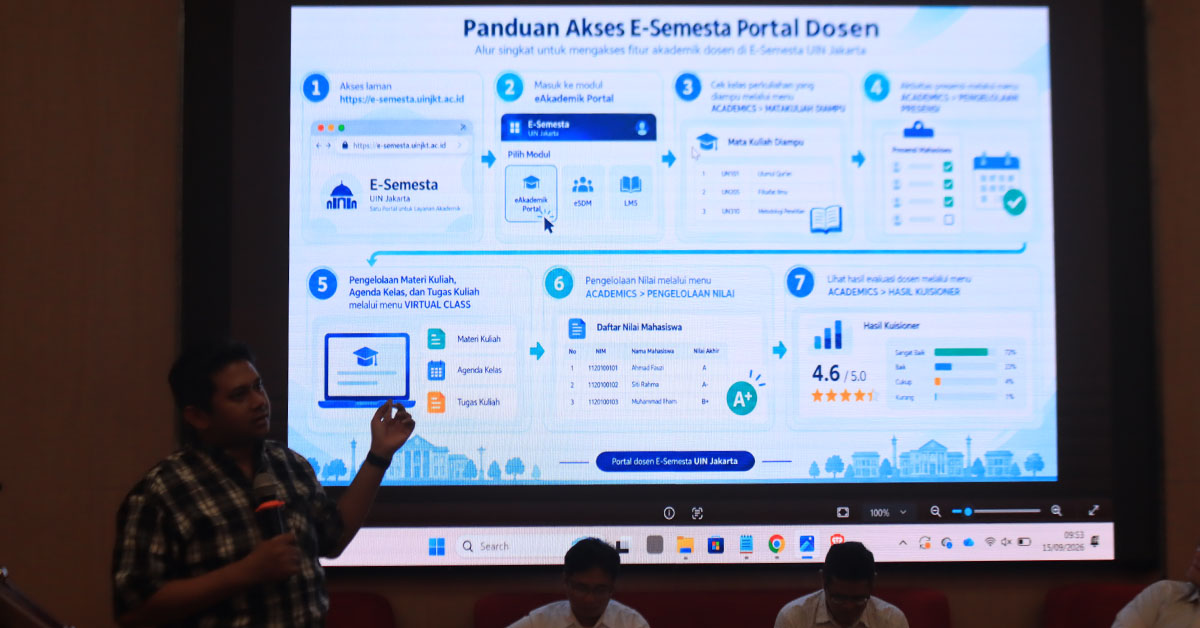
Digital Academic System Utilization Abdullah, S.Ikom., from Pustipanda explained guidelines for accessing and using e-Semesta for lecturers. The material was designed to help lecturers understand the stages of system use so that academic administration and reporting can be carried out optimally.
-
OBE-Based Curriculum Development Dr. Ramdani Miftah, M.Pd., delivered material on preparing RPS and curriculum based on the latest OBE format in 2026. Lecturers gained insights into designing learning plans oriented toward learning outcomes, including adjustments to the new assessment format.
Expected Outcomes
Through this training, FSH UIN Jakarta encourages lecturers to continuously improve their competence in preparing teaching tools and optimizing the use of digital academic systems. These steps are expected to support learning that is more measurable, well-documented, and aligned with established academic quality standards.