
FSH UIN Jakarta Holds Public Lecture on Domestic Violence from Gender, Human Rights, and Legal Perspectives
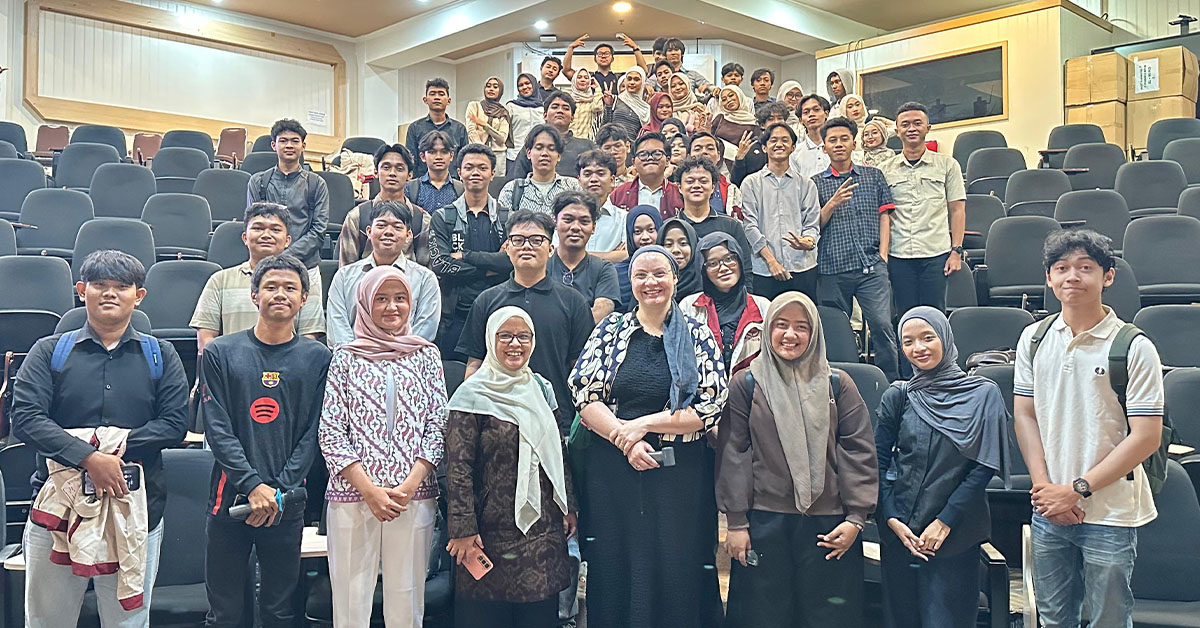
FSH NEWS, 2nd Floor Theater — The Faculty of Sharia and Law (FSH) at UIN Syarif Hidayatullah Jakarta held a Public Lecture addressing the issue of Domestic Violence (DV), featuring Dr. Balawyn Jones from La Trobe University, Australia, as the speaker. The event, held on Wednesday, September 30, 2026, was attended by third-semester students of the Law Study Program.
In her presentation, Dr. Balawyn Jones discussed domestic violence from gender, legal, human rights, and socio-cultural perspectives. She explained that domestic violence should not be understood merely as a relationship issue within the household, but rather as a pattern of abusive behavior associated with gender inequality, control, dominance, and aggression.
According to Dr. Balawyn, gender inequality is one of the factors that can contribute to domestic violence. This condition can be reflected in control over decision-making, restrictions on women’s freedom, gender stereotypes, and constructions of masculinity that emphasize aggression, dominance, and control.
Dr. Balawyn also explained various factors that make it difficult for victims to leave abusive relationships. These include threats to the safety of victims and children, financial limitations, shame, the risk of repeated violence, lack of adequate housing, and concerns regarding child custody.
From the perspective of Indonesian national law, domestic violence is regulated under Law No. 23 of 2004 on the Elimination of Domestic Violence. Responses to domestic violence involve various institutions, including the police through the Women and Children Protection Unit (PPA), the prosecution service, district courts, as well as family law mechanisms through Religious Courts.
The discussion also addressed domestic violence within the framework of human rights and international law, including the Universal Declaration of Human Rights (1948), International Covenant on Civil and Political Rights (1966), Convention on the Elimination of All Forms of Discrimination against Women (1979), and Convention on the Rights of the Child (1989).
Beyond formal legal approaches, Dr. Balawyn highlighted the importance of understanding the role of communities, customary practices, and religion in responding to domestic violence. The diversity of customary and religious practices needs to be taken into consideration in developing comprehensive victim protection systems that prioritize the fulfillment of victims’ rights.
Through this Public Lecture, third-semester Law students gained broader perspectives on domestic violence as both a legal and social issue. The event also strengthened students’ understanding of the importance of victim protection, gender equality, and the fulfillment of human rights in addressing domestic violence.